Running a marketing agency without proper legal protection is like building a house without a foundation. One contract dispute, one intellectual property claim, or one AI-related mistake could cost you everything you've worked years to build.
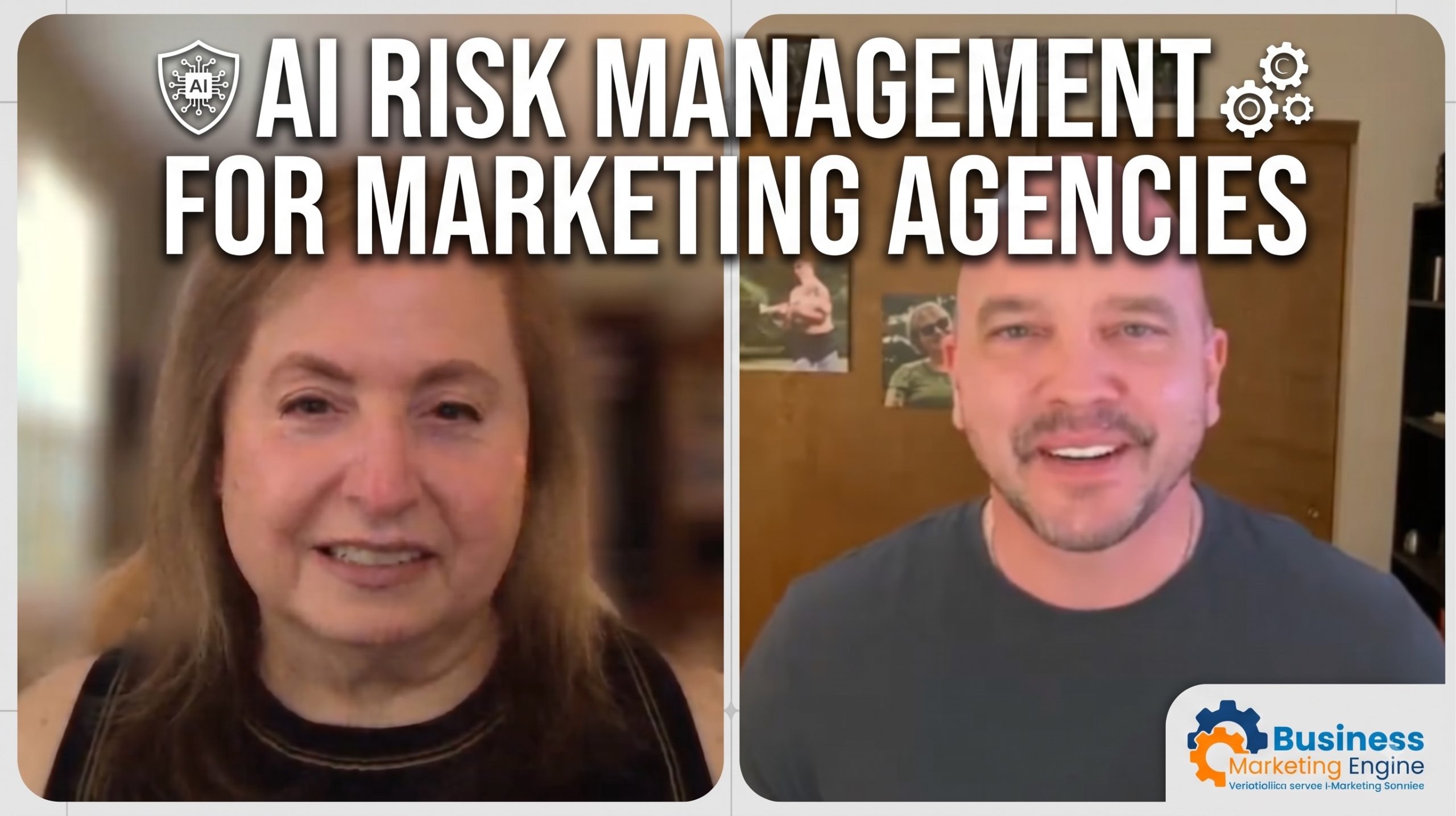
That's why I sat down with Sharon Toerek, founder of Toerek Law, for an in-depth conversation about the legal essentials every agency owner needs to understand. For over 13 years, Sharon has specialized exclusively in serving marketing agencies and creative service firms—and she's seen it all.
Meet Sharon Toerek: From Big Law to Agency Advocate
Sharon's path to becoming the go-to attorney for marketing agencies wasn't a straight line. Growing up with entrepreneurial parents—a father who ran a business while working a full-time job, and a mother who was constantly starting side ventures—Sharon developed that self-starter mentality early.
"I had entrepreneurial parents," Sharon shared. "My father owned a business and also worked a full-time job simultaneously for many, many years. My mother was entrepreneurial as well, always starting a side gig."
After law school, Sharon thought the "holy grail" was working for big law. She did work in that world for a while, but it wasn't her pathway. She hung her own shingle and eventually discovered her true calling: serving marketing agencies and creative firms.
"I sort of developed this silo of expertise understanding marketing services firms," Sharon explained. "Nobody's really serving these types of businesses well. There's a couple of really large law firms that do marketing and advertising law, but they don't really serve agencies."
For the past 13 years, Sharon's firm has been focused exclusively on this vertical—helping agencies navigate contracts, intellectual property, employee agreements, and now AI risk management.
The Entrepreneurial Reality: Not for the Faint of Heart
Before diving into legal specifics, Sharon and I discussed the reality of entrepreneurship—the highs, the lows, and everything in between.
"One of the most challenging parts is that when you're in a leadership role in an entrepreneurial organization, you're always shouldering more than you are sharing with your teams," Sharon said. "It can be a lonely spot to be in."
She's right. There are months when everyone gets paid but you. Months when you're managing crises your team will never fully understand. The financial peaks and valleys of entrepreneurship are real, and the emotional weight of leadership is something only fellow entrepreneurs truly understand.
But here's what Sharon emphasized: "That sense of agency, that sense of knowing that you would find a way through it—that's what has always lit me up about it."
Why Legal Should Be a Profit Center, Not Just Risk Management
One of the most powerful mindset shifts Sharon introduced was this: Legal affairs should be a profit center for your agency, not just a defensive necessity.
"Our fundamental belief at my firm about the role of legal in agency operations is that it's about growing or protecting your top line as much as it is about protecting your bottom line and avoiding risks," Sharon explained. "Legal affairs should be a profit center for your agency."
How does legal become a profit center?
- Better Contracts = Higher Margins: When you negotiate fair, clear terms upfront, you protect profitability
- IP Protection = Scalable Assets: Your frameworks, processes, and creative work can be licensed or leveraged
- Clear Scopes = Fewer Revisions: Ambiguity kills profit; clarity protects it
- Payment Terms = Predictable Cash Flow: Get paid faster and more reliably with the right structure
The "I Don't Believe in Contracts" Myth
Sharon shared a memorable story from speaking at HubSpot's Inbound conference. An agency owner told her, "We don't believe in contracts."
After some probing questions, Sharon discovered they actually did have contracts—they just didn't realize it. They were writing down work to be done and fees to be charged, which is a contract. The problem? It wasn't a good contract.
"What you're talking about is a contract. It may not be a good contract, but you put some things in writing about your business understanding of each other," Sharon told him.
Here's what every agency owner needs to understand: You already have contracts with your clients. The question is whether they're protecting you or exposing you to risk.
The Non-Negotiables in Every Agency Contract
Sharon broke down the essential elements that must be in every client agreement:
1. Intellectual Property Transfer Terms
The golden rule: Never transfer IP ownership until you've been paid in full.
"You may agree that the client's gonna own the work at the end of the day, but you certainly don't want them to own it before you've been paid for it," Sharon emphasized.
Your creative work, strategies, and deliverables are your leverage. Don't give them away prematurely.
2. Fair Competition Covenants (Non-Solicitation Clauses)
Brands love to poach talented agency employees. It happens all the time.
"One of your key account people has a great relationship with a client and they'd like to bring them in house," Sharon explained. "Having fair competition rules in your arrangement with your client is very important."
Your contracts should include reasonable restrictions that protect your team from being directly recruited by clients.
3. Clear Payment Terms
Specify:
- When payment is due
- What happens with late payments
- Under what conditions IP transfers to the client
- Whether you require deposits, milestone payments, or retainers
4. Scope and Deliverable Definitions
"Ambiguity kills profitability," as Sharon put it.
Be crystal clear about:
- What you're delivering
- When you're delivering it
- What constitutes "done"
- What's included vs. what requires additional fees
5. Client Responsibilities
Too many agencies write one-sided contracts that only outline what the agency will do. But clients have responsibilities too.
"Your clients have obligations. They have to provide you information, access, approvals, feedback in a timely manner," Sharon noted. "If they don't do those things, it affects your ability to perform."
Make sure your contracts clearly outline what clients must provide and the timeline consequences if they don't.
The Biggest IP Mistakes Agencies Make
Sharon identified several critical intellectual property mistakes that cost agencies millions:
The "Work for Hire" Mentality
Many agencies grew up believing they're just "work for hire" creators who don't need to care about intellectual property. This is dangerous.
"I don't agree with that point of view," Sharon said firmly. "You may agree that the client's gonna own the work at the end of the day, but you certainly don't want them to own it before you've been paid for it."
Contractor and Freelancer IP Risks
Here's a scenario most agencies don't consider: You hire a freelancer to create work for your client. The freelancer owns that work unless you have proper agreements in place.
"If you don't have a proper independent contractor agreement with that freelancer or contractor, they may very well own the work that they're creating for you to deliver to your client," Sharon warned. "And you have no ability to transfer rights that you don't own."
The solution: Every contractor and freelancer agreement must include clear IP assignment language that transfers ownership to your agency.
Working with Offshore Talent
Many agencies work with offshore contractors to manage costs. While this can be effective, it introduces additional risks:
- Data privacy concerns: If contractors are accessing client data, you need to ensure they understand confidentiality obligations
- IP ownership complexity: Different countries have different IP laws
- Quality control: How do you ensure work meets your standards?
"You need to make sure that you have confidentiality provisions, that you're doing diligence around data security," Sharon advised. "Think about what information these contractors are accessing and what guardrails you have around that."
AI Risk Management: The New Legal Frontier
Over the last two years, Sharon has added AI risk management to her suite of services for agencies—and for good reason.
"There's definitely a reason why we've added AI risk management," Sharon said. "Agencies can take some very straightforward steps, and you can start tomorrow."
The 3-Step AI Protection Framework
Step 1: Written AI Policies (Internal AND External)
Create two policies:
- Internal policy: What platforms can your team use? What's off-limits? What requires human approval?
- External policy: What do clients and vendors need to know about your AI usage?
"Don't just write the policies. It's a team sport," Sharon emphasized. "Write them and talk about them with your team members and with your client representatives."
Step 2: Updated Contract Language
Add AI-specific provisions to:
- Client service agreements
- Independent contractor agreements
Include language that discusses:
- Liability and responsibility
- Rules of the road for AI usage
- Your external AI policy as an addendum
Step 3: Platform Terms & Conditions Training
Every team member using AI platforms needs to understand the T&Cs of those platforms.
"I know this sounds like paint drying, but your team members need to be fluent in this," Sharon said. "They need to understand: What level of license are you using? What kind of account?"
The critical question: Are you using a closed system, or is your data being used for training?
"If you're using a free ChatGPT account or your freelancer is, and inputting client data and information, that's not good," Sharon warned.
Why "Progress Over Perfection" Matters for AI
Sharon's advice on AI risk management is refreshingly practical:
"I always say shoot for progress, not perfection, because this is a moving target and a team sport."
You don't need to have everything figured out perfectly. Start with the basics:
- Document your policies
- Update your contracts
- Train your team
- Iterate as the landscape evolves
Why Agencies Should Help Clients Understand AI Governance
Here's a perspective shift: Instead of viewing AI risk management as purely defensive, Sharon encourages agencies to help their clients understand it too.
"Agencies are in a unique position to help their clients think through AI governance," she noted. "You're working with multiple clients across industries—you're seeing patterns and best practices."
This positions your agency as a strategic partner, not just a vendor executing tactics.
Building Your Entrepreneurial Support Network
One of the most honest parts of our conversation was about the loneliness of entrepreneurial leadership.
"It can be a lonely spot to be in," Sharon acknowledged. "No matter how open book you are, you're always shouldering more than you are sharing with your teams."
Why Contracts Need Regular Updates
One often-overlooked aspect of legal protection: Contracts need to be living documents, not one-time creations.
Sharon emphasized that contracts should be reviewed and updated regularly to account for:
- Privacy laws: GDPR, CCPA, and evolving data protection regulations
- AI developments: New platforms, new risks, new best practices
- Accessibility requirements: ADA compliance for digital properties
- Industry changes: New platforms, channels, and service offerings
"Your contract five years ago should not be the same one you're using today," Sharon noted.
Key Takeaways for Agency Owners
If you're running a marketing agency, here are Sharon's non-negotiables:
Get a real contract—never use generic templates from the internet or AI-generated agreements
Protect your IP—don't transfer ownership until you're paid in full
Include non-solicitation clauses—prevent clients from poaching your team
Require deposits or retainers—protect your cash flow upfront
Create AI policies—internal AND client-facing documentation
Update contracts for AI—add specific language about AI usage and liability
Train your team on platform T&Cs—especially regarding data privacy and IP ownership
Review contractor agreements—ensure IP transfers properly to your agency
Update contracts regularly—for privacy laws, AI, accessibility, and industry changes
Treat legal as strategic—it should contribute to profitability, not just avoid risk
Connect with Sharon Toerek
If you're ready to protect your agency with proper legal foundations, Sharon and her team at Toerek Law specialize in exactly this work.
Toerek Law
Office: 800.572.1155
Website: www.legalandcreative.com
Podcast: The Innovative Agency
Sharon also hosts The Innovative Agency podcast, where she shares legal insights and strategic advice specifically for creative service firms and marketing agencies. If you're an agency owner looking for practical legal guidance from someone who truly understands your business model, it's a must-listen.
About Today's Business Leaders
Today's Business Leaders is hosted by Gabe Arnold, founder of Business Marketing Engine, a strategy-first marketing and technology partner for growth-driven CEOs. Each episode features in-depth conversations with entrepreneurs, executives, and industry experts who are building remarkable companies—delivering actionable insights you can implement immediately in your business.
About the Host
Gabe Arnold is the founder of Business Marketing Engine, where he helps 10M-40M companies break through revenue plateaus and build scalable, profitable marketing systems. With over 20 years of entrepreneurial experience, Gabe specializes in transforming marketing chaos into clarity through strategy-first frameworks, integrated technology systems, and fractional CMO-level leadership.
Ready to protect and grow your agency? Don't leave your legal protection to chance. Reach out to Sharon's team at Toerek Law and build the foundation your business deserves.
Toerek Law: 800.572.1155 | www.legalandcreative.com